

How to Optimize Audio Visual Systems in Meeting Rooms
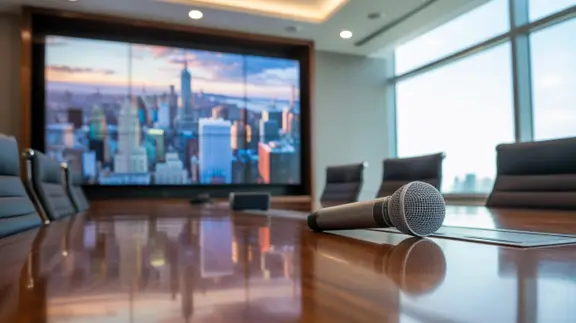
Clear communication is the foundation of any successful meeting or event. No matter how engaging the content, if people cannot hear it clearly, the impact is lost. In large meeting rooms, conference halls, churches, and multipurpose event venues, audio often poses the greatest challenge. Echo, reverberation, uneven sound distribution, and background noise can turn a carefully planned session into a frustrating experience.
As AV specialists who design and support systems for corporate clients and event venues, we at Alliant Events have seen firsthand how the right setup can transform a space. Here is how you can optimize your meeting room audio to deliver clarity, engagement, and professionalism every time.
Understand and Treat the Room’s Acoustics
Every room has its own acoustic character. Size, ceiling height, surface materials, glass, furniture, and even the number of people in the room all influence how sound behaves. Without proper planning, voices can echo, music can sound muddy, and important details can get lost.
A professional acoustic analysis will reveal problem areas such as dead zones, overly reflective surfaces, or frequencies that build up unevenly. Solutions typically include:
| Solution | Purpose | Example Applications |
| Acoustic Panels | Absorb reflections and reduce reverberation | Walls, ceilings in conference rooms |
| Diffusers | Scatter sound evenly to prevent echoes | Back walls of large halls |
| Soundproofing | Block external noise interference | Door seals, heavy curtains, double glazing |
| Carpeting & Soft Furnishings | Naturally reduce echo | Boardrooms, breakout areas |
The earlier acoustic treatment is planned, the better. Retrofitting is possible, but designing for sound from the start saves costs and delivers a superior experience.
Invest in Professional-Grade Equipment
Audio equipment is infrastructure, not decoration. High-quality microphones, amplifiers, and speakers are built to deliver reliable, intelligible sound day after day. Cheaper alternatives often struggle with feedback, distortion, or durability.
Modern systems now include advanced features like real-time feedback suppression, adaptive gain control, and noise reduction. These intelligent tools automatically balance sound, making it easier for both speakers and audiences to focus on the message rather than the technology.
Optimize Microphones and Speaker Placement
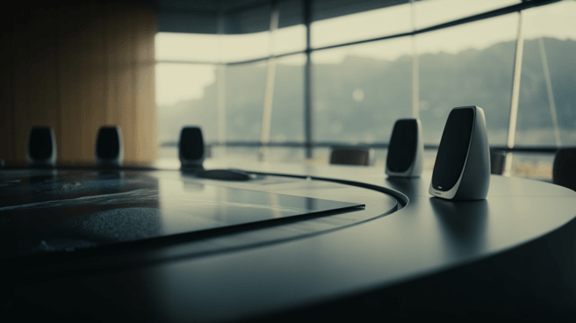
Microphones should be chosen and positioned with intention. Directional microphones isolate the speaker’s voice while minimizing surrounding noise, a crucial factor during panel discussions or Q&A sessions. Placement is equally important; poor positioning leads to feedback loops and uneven coverage.
Relying on a single pair of speakers in a large room almost always produces “sound shadows,” areas where the audio is weak. Instead, design a distributed speaker system that delivers consistent sound levels throughout the space. This prevents the front row from being overwhelmed while those in the back strain to hear.
Employ Digital Signal Processing (DSP)
Digital signal processors are the hidden backbone of modern AV systems. They allow engineers to equalize frequencies, manage dynamics, apply delay for synchronized sound, and suppress feedback. When properly tuned, DSP ensures that every word and every note comes through with precision, regardless of room size or shape.
Maintain Systems with Testing and Calibration
Even the best installations degrade over time. Equipment settings drift, furniture changes alter acoustics, and gradual wear affects performance. Regular audio testing and recalibration should be scheduled just like IT updates or HVAC checks. Consistency is key; attendees expect the same quality every time they walk into the room.
Incorporate Noise Management and Accessibility
Noise-cancelling technology, once reserved for personal headsets, is now available in larger AV installations. By counteracting ambient sounds such as HVAC systems or outside traffic, these solutions keep the focus on the speaker.
For inclusivity, personal audio devices can integrate with the main sound system via Bluetooth or infrared. These devices allow participants to control their own volume levels, ensuring accessibility for those with hearing challenges. A modern meeting room should account for the needs of every attendee.
Plan for Hybrid and Virtual Meetings
With hybrid work here to stay, meeting rooms must serve both in-person and remote audiences. Poor audio is the number one complaint from remote participants. Ceiling microphones or boundary mics ensure all voices are captured, while DSP separates speech from background noise before sending it into conferencing platforms. Always test with a remote attendee before the actual meeting to verify balance and clarity.
Integration with Video and Lighting
Audio is part of a broader ecosystem. Cameras with voice-tracking microphones can automatically focus on whoever is speaking, enhancing engagement. Lighting decisions also affect audio; HVAC systems required to cool bright lights often add background noise that must be suppressed. Coordinating audio, video, and lighting ensures a seamless experience.
Design for Scalability
Many organizations make the mistake of installing a system that only works for their current needs. AV systems should be scalable. Modular designs allow you to add microphones, speakers, or processors later. Networked AV-over-IP solutions provide long-term flexibility, making it easier to expand without a full redesign.
Simplify User Control
The most powerful AV system is wasted if it is too complicated. Control panels should be intuitive, with presets like “Board Meeting,” “Presentation,” or “Video Call” instead of dozens of technical sliders. A system that staff can operate confidently without an AV technician on hand is worth the investment.
Tailor Solutions for Different Spaces
- Churches: Clear speech is critical for sermons, while music should remain full and immersive. Panels, diffusers, and a distributed speaker system create balance. If you are looking to enhance worship environments, explore our dedicated church events audio visual services.
- Conference Rooms: Intelligibility is paramount for effective meetings. Directional microphones and modest acoustic treatments eliminate echo and support productive discussions. Learn more about our conference room audio visual services designed for business environments.
- Event Venues: Flexibility is essential. Systems should adapt between concerts, speeches, and hybrid events, combining scalable audio reinforcement with acoustic solutions.
Train the Team Behind the System
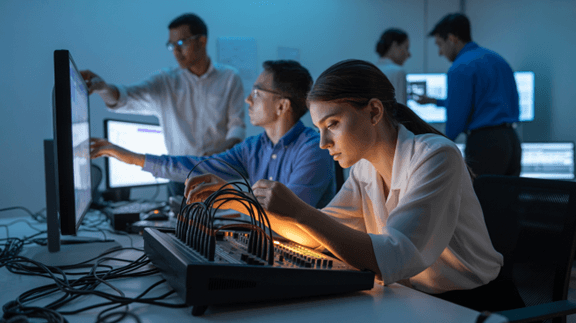
Technology only works if people know how to operate it. Training your staff or IT team ensures they understand not only how to use the equipment but also how to troubleshoot quickly during a live event. An empowered team prevents small issues from turning into major disruptions.
Why Professional AV Services Matter
Optimizing audio in large spaces requires technical expertise and field experience. Professional AV partners provide:
| Service | Benefit |
| Acoustic Analysis and Design | Identify unique challenges in your space |
| Sound System Design and Installation | Ensure even coverage and clarity |
| Equipment Selection | Match gear to your specific needs |
| System Calibration and Tuning | Fine-tune performance for reliability |
| Ongoing Support | Keep systems optimized over time |
At Alliant Events, we bring years of experience in event production and AV integration to help businesses and venues achieve seamless communication.
Final Thoughts
Audio is often underestimated until it fails, but when optimized, it elevates the entire meeting or event experience. By understanding acoustics, investing in the right equipment, and maintaining your systems with expert support, you create a professional environment where every voice is heard clearly.
For organizations and venues looking to transform their meeting rooms into spaces built for clarity and engagement, partnering with professionals ensures lasting results.
Ready to optimize your meeting room audio visual systems? Contact us to start building an environment where communication truly connects.

Sanjay Patel
Sanjay Patel has been the Chief Executive Officer of Alliant Events since 1991. Under his leadership, the company has delivered audio-visual services for various events, including special events, trade shows, and live performances.
He holds a Bachelor of Science degree in Electrical Engineering with a focus on Electrical and Electronics Engineering from the University of California, Irvine.